
 Don’t try to butt heads with these little guys – it just might kill you! The first known venomous frogs have been discovered Brazil. They use small spines on their head, and a vicious head thrash, to inject their potent venom. Yikes! 🐸

Poisonous frogs are nothing new, but ‘truly’ venomous frogs are. Traditionally, venomous creatures bite, sting or stab you to do their damage, while you have to bite or touch poisonous critters to feel their effects. I suppose the venomous variety are a bit more proactive with their toxins. 🐍
“Discovering a truly venomous frog is nothing any of us expected, and finding frogs with skin secretions more venomous than those of the deadly pit vipers of the genus Bothrops was astounding,” co-author Edmund Brodie, Jr., of Utah State University said in a press release.
Brodie and his colleague Carlos Jared of Instituto Butantan in São Paulo, Brazil, study Corythomantis greeningi (Greening’s frog) and Aparasphenodon brunoi (Bruno’s casque-headed frog). Jared learned the frogs were venomous the hard way after a Greening’s frog ‘stung’ his hand, which resulted in excruciating pain that spread up his arm – lasting five hours!
According to NBC News, a single gram of the venom from the more toxic frog species, Aparasphenodon brunoi, could kill more than 300,000 mice, or about 80 humans, while a gram of the venom from Corythomantis greeningi could kill more than 24,000 mice, or about six humans.
The frogs release a white, toxic mucus from glands in their skin when they feel threatened. Then they use the spines on their skull to drive the toxins into its enemy’s flesh. No thanks…


 Who knew sea slugs could be adorable? The ‘sea bunny’ slug, or Jorunna parva, is a species known for its fluffy bunny-like appearance. No wonder it just gave the internet a heart attack! 💓



 This weekend Americans will be celebrating our country’s independence, but these creatures are one step ahead of us! Check out nature’s version of the good ol’ red, white, and blue 🗽🇺🇸 Happy Fourth of July!


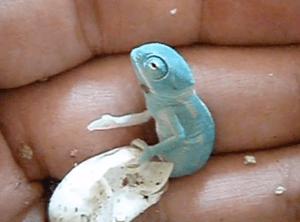 There is a reason this video of a chameleon hatching – posted in 2008 – has over 1,715,098 views. I could do without the epic music, but overall this video is absolutely captivating; it starts changing colors within minutes. You can watch its tiny two-toed
 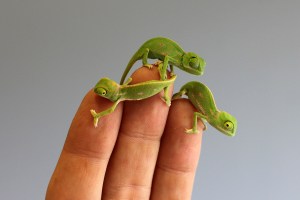 Most chameleon species lay eggs (oviparous), while a few give birth to live young (ovoviviparous).
 Krystian Science