Father’s Day Has Gone WILD: Nature’s Top Animal Dads

KS NatureThis weekend is Father’s Day, but we should take some time out to celebrate more than just our human dads. National Geographic crafted an adorable list of the top animal dads. Enjoy! 🐧🐸🐦

7) ‘Emperor penguin fathers endure below-freezing temperatures and forgo food to incubate their eggs. After the female lays a single egg, her mate rests it on his feet and covers it with a flap of skin (above, a penguin protects its chick using the same skin flap)… For four months the males huddle together, not moving much, while the females fill up on seafood in the ocean. The females eventually return to help feed the newly hatched chicks.’

090618-07-greatest-animal-dads-emperor-penguin_big

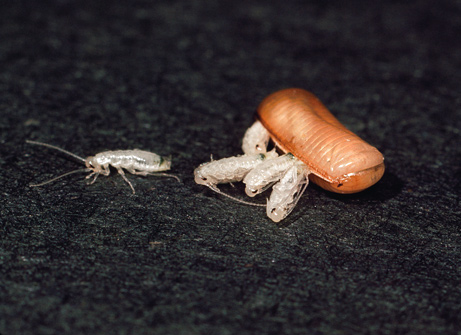
6) ‘Cockroaches may get a lot of bad press, but you can’t call them deadbeat dads. In species that feed on wood, the parents use the material to build nests and find food for their larvae… Cockroach fathers will even eat bird droppings to obtain nitrogen, a necessary part of their diet, and carry it back to their young (below, German cockroach babies emerge from an egg). Wood-feeding cockroaches are also tidy parents, sweeping nurseries clean of dead cockroaches and fungus to shield their families from infection.’
090618-06-best-animal-fathers-cockroaches_big

5) ‘The barking frog—named for its throaty, dog-like call—guards his brood after the female lays her eggs under rocks or logs in the U.S. Southwest. The frog hangs out by the eggs for several weeks, wetting the eggs with his urine if they dry out… In other frog species, males carry their larvae on their backs or swallow their newly hatched tadpoles to shelter them in special mouth sacs giving the offspring a safe haven to develop.’

090618-05-best-animal-father-barking-frog_big

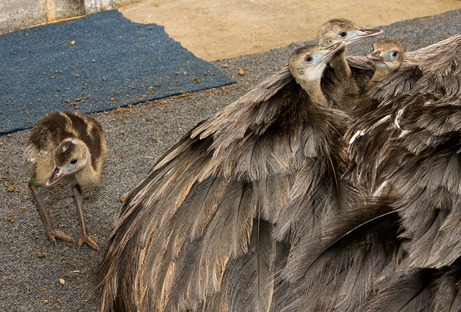
4) For most birds, females are stuck with child care, but not so for the South America’s greater rhea (below, chicks nestle into their dad’s back feathers at Washington D.C.’s National Zoo). Females mate with several males during the breeding season, and several birds will lay their eggs in a nest created by a male. The male then incubates up to 50 eggs for six weeks and cares for the newly hatched young. The dads aggressively guard the babies, charging at any animal—even a female rhea—that approaches. The male rhea at the National Zoo, a second-time father, keeps his chicks from meandering too far away with a rapid clacking of his bill, according to zoo officials.’
090618-04-best-animal-fathers-greater-rhea_big

3) ‘Male marmosets in South America not only carry, feed, and groom their twin babies (pictured, a baby black-tailed marmoset with its mother in a Tokyo zoo), they may even act as “midwives” during birth, grooming and licking the newborns. Marmoset dads may be so involved because of the high cost of birth for the mother, whose unborn babies eventually make up 25 percent of her body weight—equal to a 120-pound woman giving birth to a 30-pound infant.’

090618-03-best-animal-dads-marmoset_big

2) ‘Talk about back-breaking work—the male giant water bug (pictured below in California) literally totes around his brood of about 150 eggs until they hatch. After a courtship of sparring and grasping, these ferocious insects mate, and the females cement their fertilized eggs to the males’ backs with a natural glue… The daddy water bug fiercely protects his eggs and periodically exposes them to air to prevent them from growing mold.’

090618-02-giant-water-bug_big

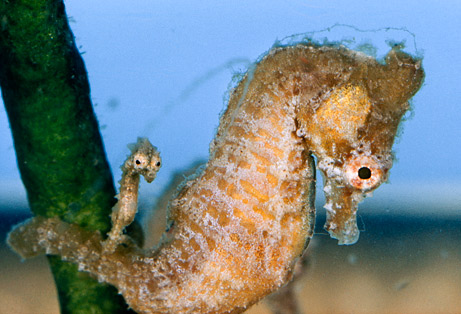
1) ‘Seahorses are a type of fish in which the males actually get “pregnant.” The female seahorse deposits her eggs in the male’s specialized pouch, and the male carries up to 2,000 babies during its 10- to 25-day pregnancy. “They’re fascinating—males have more or less become females, [almost] transgendered,” said Mark Pagel, an evolutionary biologist at the University of Reading in the U.K. “They’re devoted fathers.”‘
090618-01-best-animal-dads-seahorse_big


I should also take a second to honor MY dad, the wonderful and amazing RICHARD KRYSTIAN! Happy Father’s Day to the best man I know. Raising me wasn’t easy 😁

199654_514820952585_8135_n


Father’s Day Has Gone WILD: Nature’s Top Animal Dads

Designer Tweaks Typeface to Show What It’s Like to Read with Dyslexia

KS HealthDaniel Britton, a graphic designer in London, has created a typeface that looks like an alien language. It’s not from another planet, but it is designed to give the average reader an out of body experience. Britton has managed to recreate what its like to read with dyslexia.
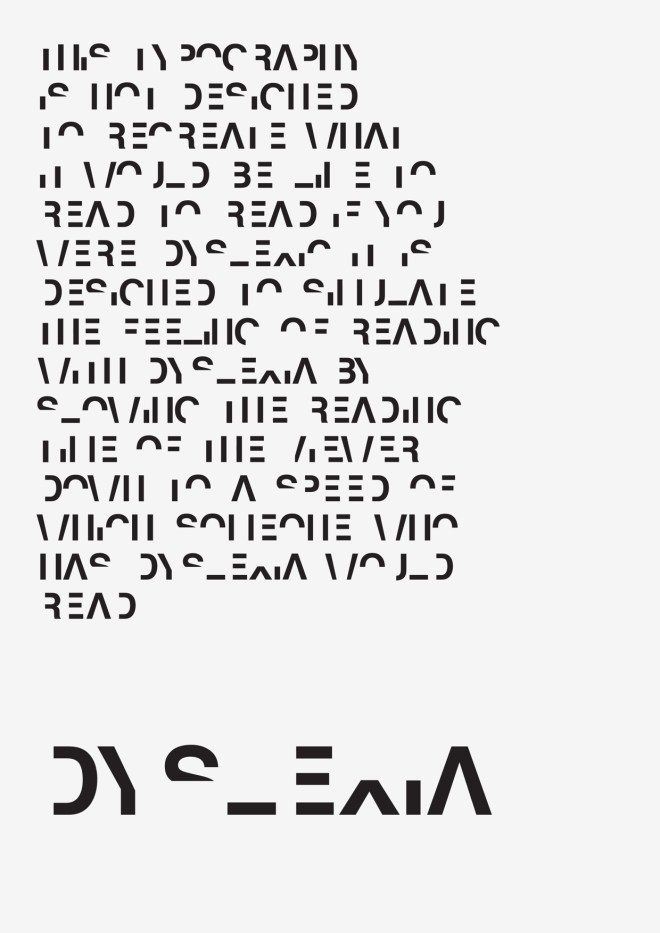
The image below is as disorienting as it is enlightening. See how you might process words if you were dyslexic.

IMAGE: Daniel Britton

Britton was diagnosed with dyslexia when he was 18 years old. He quickly realized he wasn’t alone. According to Dyslexia International, one in ten people are dyslexic, which equates to roughly 700,000,000 adults and children around the world.

“What this typeface does is break down the reading time of a non-dyslexic down to the speed of a dyslexic. I wanted to make non-Dyslexic people understand what it is like to read with the condition and to recreate the frustration and embarrassment of reading everyday text and then in turn to create a better understanding of the condition.” – Britton

Dyslexia is often greatly misunderstood. Britton hopes his typeface will help non-dyslexics empathize with those who struggle. And, if all goes to plan, his artwork will eventually lead to faster more effective treatment for dyslexia. That way, dyslexic students can learn at the same pace as their peers, giving them an equal chance to succeed! 👏


Gallery

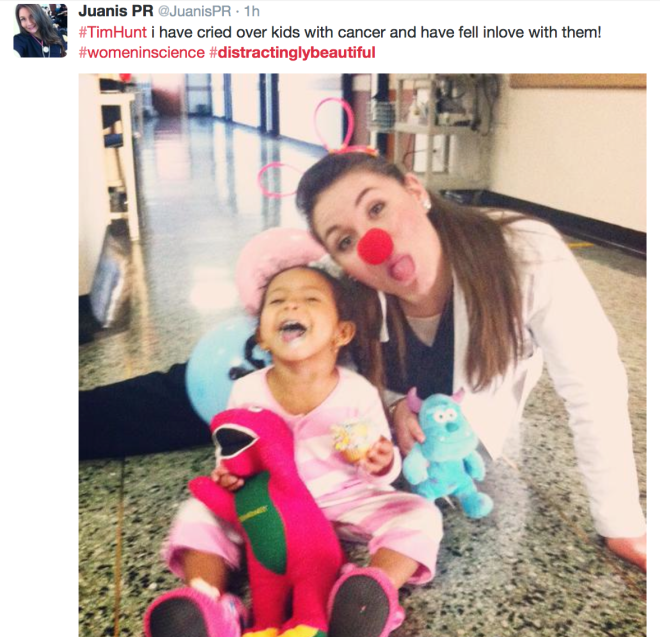
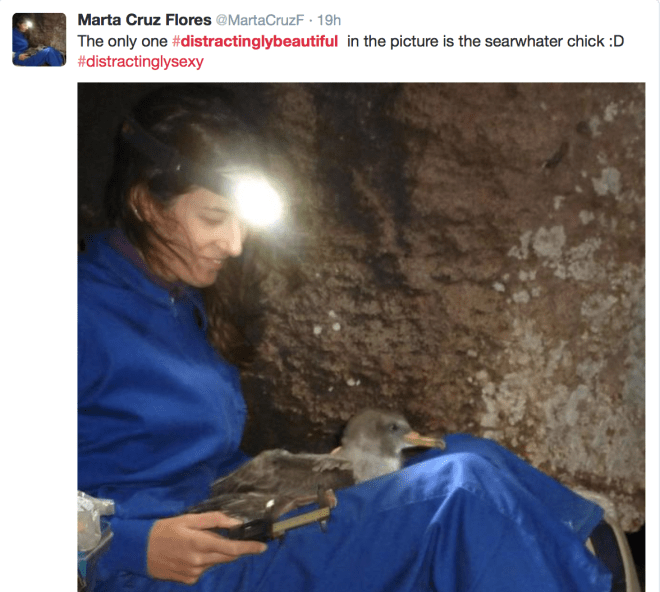
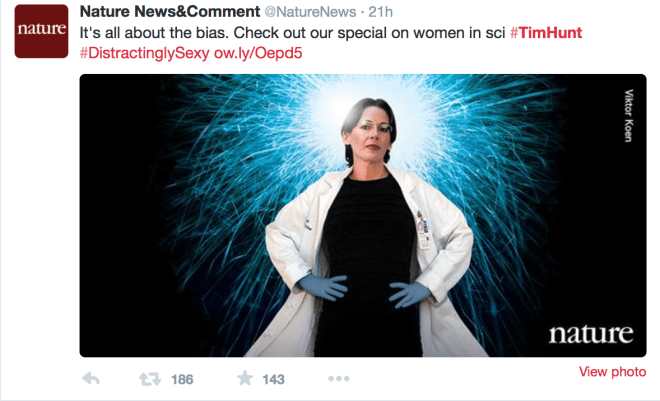
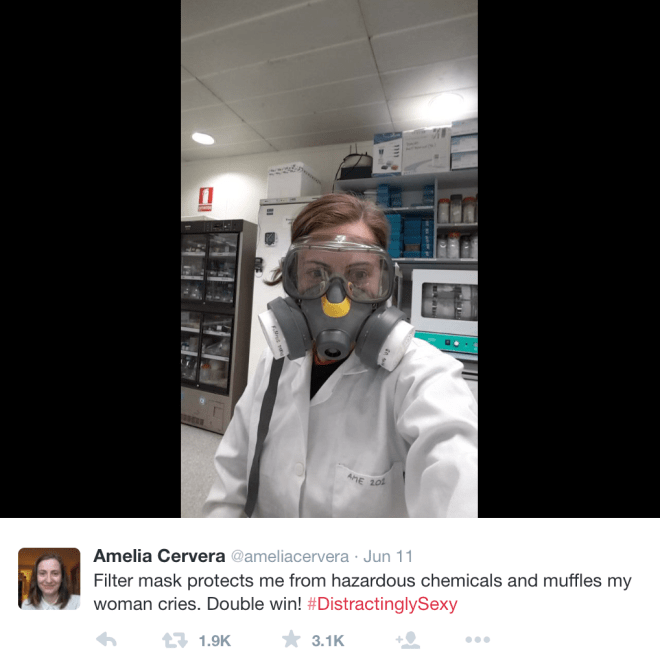
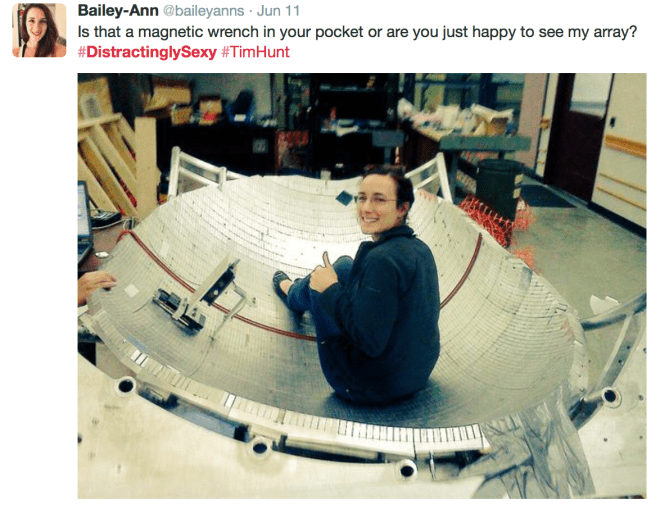
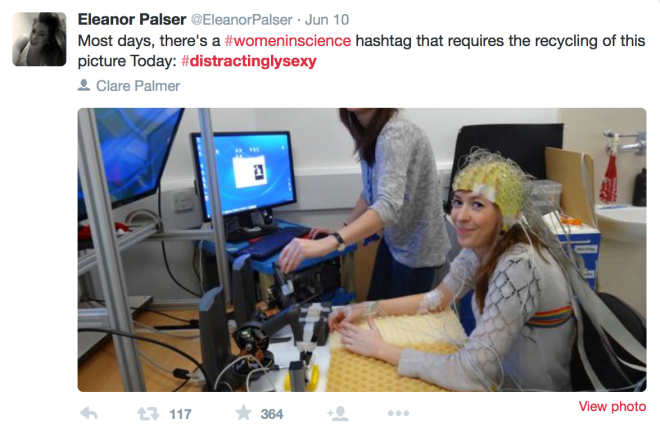
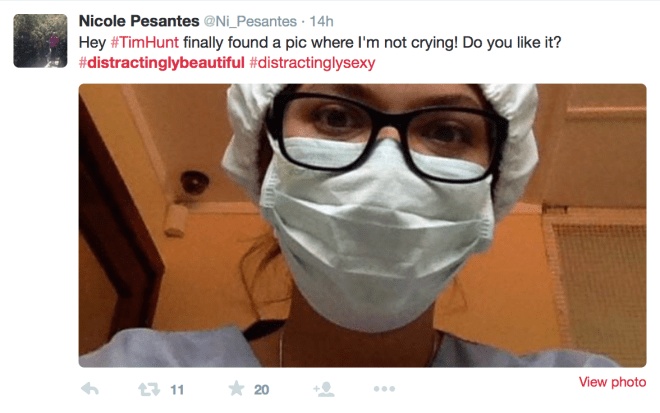
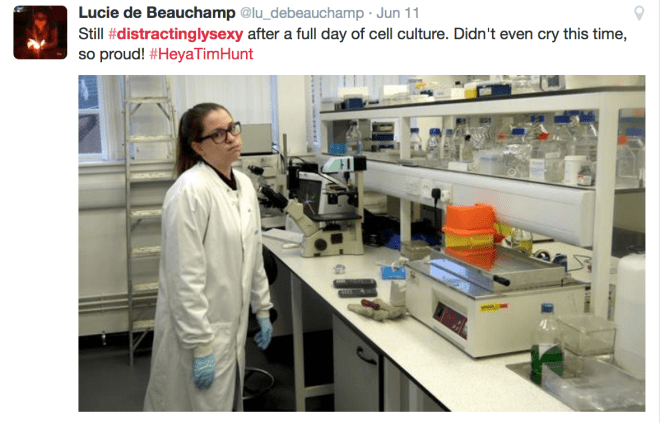
Hell Hath No Fury Like STEM Women Scorned by Tim Hunt – Twitter Loves #DistractinglySexy

KS_LOGOs2_PopCultureScreen Shot 2015-06-13 at 12.13.29 PMWomen in STEM are awesome. For those of you who don’t know, STEM = an acronym referring to the academic disciplines of science, technology, engineering, and mathematics. While most people respect and support women in STEM, there are still a select few who are determined to undermine their smarts and hard work.

One of these people happens to be Nobel Prize-winning biochemist Sir Tim Hunt, who made headlines this week for discussing the ‘problem’ with women in the lab. He allegedly said, “let me tell you about my trouble with girls … three things happen when they are in the lab … You fall in love with them, they fall in love with you and when you criticize them, they cry.”

In response, rad lab ladies around the world decided to take to Twitter to share their thoughts about their jobs and the lovely Tim Hunt. The hashtags below have proven to be both enlightening and highly entertaining. I’ve selected a few of my favorites – in no particular order. Enjoy! 👏

#distractinglybeautiful  #distractinglysexy  #distractinglyawesome  #timhunt Screen Shot 2015-06-13 at 11.53.16 AM Screen Shot 2015-06-13 at 11.02.47 AM Screen Shot 2015-06-13 at 11.49.32 AM Screen Shot 2015-06-13 at 11.42.24 AM Screen Shot 2015-06-13 at 11.50.53 AM Screen Shot 2015-06-13 at 11.48.43 AM Screen Shot 2015-06-13 at 11.51.42 AM Screen Shot 2015-06-13 at 11.42.48 AM Screen Shot 2015-06-13 at 11.56.13 AM Screen Shot 2015-06-13 at 11.52.55 AM Screen Shot 2015-06-13 at 11.43.37 AM Screen Shot 2015-06-13 at 11.47.34 AM Screen Shot 2015-06-13 at 11.48.17 AM Screen Shot 2015-06-13 at 11.50.19 AM Screen Shot 2015-06-13 at 11.48.04 AM Screen Shot 2015-06-13 at 11.49.04 AM Screen Shot 2015-06-13 at 11.52.19 AM Screen Shot 2015-06-13 at 11.15.24 AM Screen Shot 2015-06-13 at 11.48.32 AM Screen Shot 2015-06-13 at 11.50.42 AM Screen Shot 2015-06-13 at 11.04.17 AM

Gallery

Will This Flag Represent Planet Earth on Mars in 2025?

Krystian Science Space

Image: OSKAR PERNEFELDT

Each of the Apollo missions that touched down on the Moon planted an American flag in the soil. What if, instead of planting a flag that represented our country, we planted a flag that represented our WORLD? 🌎

Oskar Pernefeldt of the Beckmans College of Design in Stockholm, Sweden, has proposed one simple blue flag to represent all of planet Earth as part of his graduation project.

Here is the symbolic explanation, according to Pernefeldt: “Centered in the flag, seven rings form a flower – a symbol of the life on Earth. The rings are linked to each other, which represents how everything on our planet, directly or indirectly, are linked. The blue field represents water which is essential for life – also as the oceans cover most of our planet’s surface. The flower’s outer rings form a circle which could be seen as a symbol of Earth as a planet and the blue surface could represent the universe.”

Pernefeldt’s flag is designed to represent planet Earth and help remind people that we all share this planet, regardless of national boundaries. I’m in love with this idea! It is part of the reason I love following the International Space Station. The ISS is one of those magical places where multiple nationalities come together to work towards a common goal, no matter what country they call home.

These photos provide a glimpse into the future if Pernefeldt’s vision ever became a reality.

This slideshow requires JavaScript.

Click the video below for a more detailed explanation of how the International Flag of Planet Earth was constructed.

Construction video of The International Flag of Planet Earth.
The video is a part of the graduation project by Oskar Pernefeldt, 2015.

Animation by: Johan Fredriksson / http://www.fredrikssondesign.se


Will This Flag Represent Planet Earth on Mars in 2025?

Enjoy These Breathtaking Photos From Space as We Prepare to Welcome Three ISS Crew Members Back to Earth

Krystian Science SpaceThe space community has fully embraced social media and sharing online, which is truly a treat for the world! Day-to-day life on the International Space Station is something very few people get to experience. Plus, the view from up there is simply one-of-a-kind. NASA’s flickr account is updated frequently, pulling from Twitter, Facebook, Instagram, and other internet accounts. I’ve decided to post a few of my favorites in honor of the three space station members set to return to earth in a few days! 🚀

NASA astronaut Terry Virts (left) Commander of Expedition 43 on the International Space Station along with crewmates Russian cosmonaut Anton Shkaplerov (center) and ESA (European Space Agency) astronaut Samantha Cristoforetti on May 6, 2015 perform a checkout of their Russian Soyuz spacesuits in preparation for the journey back to Earth. Credits: NASA
NASA astronaut Terry Virts (left) Commander of Expedition 43 on the International Space Station along with crewmates Russian cosmonaut Anton Shkaplerov (center) and ESA (European Space Agency) astronaut Samantha Cristoforetti on May 6, 2015 perform a checkout of their Russian Soyuz spacesuits in preparation for the journey back to Earth.
Credits: NASA

The three ISS crew members pictured above are scheduled to depart the orbiting laboratory on Thursday, June 11, after more than six months in space performing scientific research and technology demonstrations. We will be welcoming back Russian cosmonaut Anton Shkaplerov, NASA astronaut Terry Virts, and my girl crush, Italian born ESA astronaut Samantha Cristoforetti. For a full schedule of their anticipated departure/arrival click here.

NASA Television will air converge of their departure and return to Earth. Coverage begins at 10:40 a.m. EDT Wednesday, June 10, when Expedition 43 Commander Terry Virts of NASA hands over command of the space station to cosmonaut Gennady Padalka of the Russian Federal Space Agency (Roscosmos).

Gallery

2015 Xtreme Eating ‘Winners’: Sad Day for Red Lobster, Sonic, and Cheesecake Factory – ‘Merica!

KS HealthThe Center for Science in the Public Interest surveyed the menus of more than 200 restaurant chains in search of high-calorie, high-fat gut bombs. They found the drinks, meals, sides, desserts, and ridiculous combos that are unbearably high in calories, sugar, saturated fat, and sodium. Nine items topped the list – view them below! I’m embarrassed proud to admit one of my top guilty pleasure treats (#2) made the list this year. Eat up 😉

The full list of “winners” was published in the June issue of CSPI’s flagship publication, Nutrition Action Healthletter.

Xtreme Eating 2015 Winners!

‘It’s not easy to win an Xtreme Eating award. For starters, most restaurant meals pack around 1,000 calories, so anything in that neighbor-hood is a yawner. To stand out in the crowd, you’ve got to hit around 2,000 calories—an entire day’s worth of food—even if it’s just dessert.

But our winners have what it takes…a total disregard for the obesity epidemic and the coming diabetes tsunami. Of course, you can’t blame restaurants for that. That would be so unfair.’


Gallery

SLOTH VIDEO: Top 10 Reasons Sloths are Cooler Than You – Cute Overload

KS Naturebaby-slothSloths are drowsy tree-dwellers that spend most of their time eating and sleeping in the tropical rainforests of Central and South America. These adorable, mysterious creatures melted the hearts of millions way before Kristen Bell lost it on Ellen. I’ve crafted what I believe to be the most comprehensive video list explaining why sloths are the coolest (and cutest) mammals on the planet 🙂 Click away!

10 – They Rock Baby Sloth Onesies

9 – They Get the Hang of Things

8 – They Give Great Hugs

7 – They Play Well With Others – In Buckets!

6 – They Enjoy Bath Time

5 – People Don’t Make Memes About You

Disney Sloths to the Rescue!

4 – They Eat Their Vegetables

3 – They Don’t Rush Through Life

2 – Celebrities Cry Over Them

1 – They Make This Adorable Sound

Video

L’Oreal to Begin 3-D Printing Human Skin – Is this the End of Animal Testing?

KS_LOGOs2_PopCultureBeauty giant L’Oreal USA has announced a partnership with 3-D bioprinting company Organovo to develop 3-D printed skin tissue for product testing and other areas of advanced research.

Screen Shot 2015-05-22 at 12.15.02 PM

L’Oreal is no stranger to the field of skin engineering. The company has spent decades exploring skin culture technologies that could take them away from forms of animal testing.

L’Oreal has roughly 60 scientists working on site, at a lab in Lyon, France, growing more than 100,000 skin samples annually. According to Bloomberg – In a year, their efforts produce a cowhide worth of human skin samples. The process yields nine different types of human skin samples, representing different ages and ethnicities, that can be used to test various products.

For this partnership, L’Oreal will provide skin expertise and all the initial funding, while Organovo, which is already working with such companies as Merck to print liver and kidney tissues, will provide the technology – with the hopes of automating the process.

What is the end game?

  • L’Oreal wins exclusive rights to the 3D printed skin developed with Organovo for uses related to non-prescription skin care products.
  • Organovo will retain rights to the tissue models for efficacy testing of prescription drugs, toxicity tests, and the development and testing of therapeutic or surgically transplanted tissues.

The end of animal testing?

The beauty industry has famously been at war with animal rights activists protesting the use of animals – with watchdogs like PETA creating lists of companies that are either ‘cruelty-free’ or ‘still testing’ on animals.

In 2013, the European Union banned the import and sale of cosmetics containing ingredients tested on animals. L’Oreal, which is based in France, was one of the first beauty companies to respond. L’Oreal said it would respect the ban and “no longer sell in Europe any finished product with an ingredient that was tested on animals.”

L’Oreal’s current stance on animal testing as posted on their website: The Group no longer tests on animal, anywhere in the world, and does not delegate this task to others.

3-D printed skin tissue will not only protect animals from unnecessary product testing, it will also greatly impact the fields of medicine and cosmetic surgery.

_83089659_l'oreal

What does L’Oreal have to say about the new partnership?

Guive Balooch -VP of L’Oreal’s global Technology Incubator- said the potential for this new field of technology is ‘boundless.’

Balooch told The Washington Post, “Some of the biggest potential advantages are the speed of production as well as the level of precision that 3-D printing can achieve… L’Oreal’s focus right now is not to increase the quantity of skin we produce but instead to continue to build on the accuracy and consistent replication of the skin engineering process.”

Organovo Holdings, Inc & Bioprinting

Organovo is one of the first companies to offer commercially available 3D-printed human organs. This deal with L’Oreal is their first foray into cosmetics.

Last year they launched their first product, the exVive3D human liver, for use in toxicology and other preclinical drug testing. They struck a deal with Merck & Co. last month to use this liver system for testing as a supplement to in vitro and animal testing.

Click below to watch Organovo’s video explaining the bioprinting process

L’Oreal to Begin 3-D Printing Human Skin – Is this the End of Animal Testing?

The World Health Organization Wants You To Quit It With Catchy Nicknames Like ‘Mad Cow Disease’ and ‘Swine Flu’

KS HealthThe World Health Organization is so fed up with us giving infections, syndromes, and various diseases catchy nicknames, that they have made an official request.

WHO says NO!
Not Acceptable: Swine Flu, Monkey Pox, Mad Cow Disease, Middle East Respiratory Syndrome, Spanish Flu, Bird Flu, West Nile Virus, Lou Gehrig’s disease, etc.

WHO posted the following ‘note for the media‘ on their website:

 WHO called on scientists, national authorities and the media to follow best practices in naming new human infectious diseases to minimize unnecessary negative effects on nations, economies and people.

The concern is that diseases are often given common names by people who work outside of the scientific community, and once these names are established on the Internet and in print, they are very hard to change. So, WHO argues that it is important that whoever FIRST reports on a newly identified human disease uses a ‘scientifically sound’ and ‘socially acceptable’ name.

“In recent years, several new human infectious diseases have emerged. The use of names such as ‘swine flu’ and ‘Middle East Respiratory Syndrome’ has had unintended negative impacts by stigmatizing certain communities or economic sectors,” says Dr Keiji Fukuda, Assistant Director-General for Health Security, WHO.

Dr Fukuda went on to explain that, while this may sound trivial to some people, disease names can have serious consequences for those directly affected. We have experienced certain backlash against members of religious or ethnic communities, and witnessed unjustified barriers to travel, commerce, and trade. Worst of all, some of these names have triggered the needless slaughter of food animals 😦

If you need an example of how WHO thinks new human diseases should be handled you can look to the Swine flu epidemic in 2009, which WHO asked we call A(H1N1)pdm09.

So, what does WHO consider to be ‘inappropriate’?


Terms that should be avoided in disease names include geographic locations (e.g. Middle East Respiratory Syndrome, Spanish Flu, Rift Valley fever), people’s names (e.g. Creutzfeldt-Jakob disease, Chagas disease), species of animal or food (e.g. swine flu, bird flu, monkey pox), cultural, population, industry or occupational references (e.g. legionnaires), and terms that incite undue fear (e.g. unknown, fatal, epidemic).

Interesting Fact: The final name of any new human disease is assigned by the International Classification of Diseases (ICD), which is managed by WHO. Doctors, nurses, researchers, coders, policymakers, insurers, and patient organizations around the world use the ICD to classify diseases in a standardized way.

As a member of the media, and a lover of the science/tech/health community, I see both sides of this issue. But, I don’t see this plea having much of an impact on publications that push eye-catching, SEO driven, headlines. That being said, I will try to use WHO approved disease names moving forward! 😉

The World Health Organization Wants You To Quit It With Catchy Nicknames Like ‘Mad Cow Disease’ and ‘Swine Flu’

Keeva the Baby Chimp Paired with Surrogate Mom for a Mother’s Day to Remember

KS NatureA baby female chimpanzee by the name of Keeva, born to the Maryland Zoo in Baltimore on March 12th, has been given the best Mother’s Day present – a new surrogate mom!

Once the Maryland Zoo realized Keeva’s birth mother couldn’t care for her, they teamed up with Tampa’s Lowry Park Zoo to find a surrogate mother to raise her properly. You can view the big announcement on the Maryland Zoo’s website and Facebook page 🙂

IMAGE: Facebook - The Maryland Zoo in Baltimore
Baby Keeva (IMAGE: Facebook – The Maryland Zoo in Baltimore)

The tiny primate was born at 2.6 pounds to first time mother ‘Carole,’ who has been with the chimp troop at the Maryland Zoo for 27 years. Unfortunately, Carole could not care for Keeva properly, and the Zoo was forced to make a tough decision.

“The birth seemed to be without complication and the baby appeared to be healthy,” stated Mike McClure, general curator at The Maryland Zoo. “However, it soon became apparent that Carole was not adapting to motherhood appropriately and we made the difficult decision to remove and hand-rear the baby while searching for a suitable home with a nurturing surrogate.”

Maryland Zoo staff felt it was important to familiarize Keeva with the sights, smells, and sounds of the troop. The infant spent several weeks in a behind-the-scences section of the Zoo’s Chimpanzee Forest, receiving round-the-clock care.

While Keeva was experiencing her first few weeks of life, the Zoo knew they needed to find her a surrogate. They worked with the Chimpanzee Species Survival Plan (SSP) of the Association of Zoos and Aquariums (AZA) to find an adult female chimpanzee ready to take on the task. Luckily, they found an experienced surrogate named ‘Abby.’

“We know Abby has the instincts and skills to raise a baby chimp – she has been successful twice before,” noted Lee Ann Rottman, general curator of Tampa’s Lowry Park Zoo. “We have every reason to believe that she will raise Keeva as her own, when given the opportunity.”

Keeva is now 5 pounds, can hold her head up, has started to speak, and is beginning to teethe! But, it will be 4-6 months before she is introduced to Abby. She will be integrated slowly, as chimpanzees live in complex social groups with a strict hierarchal structure. We wish her the best of luck.

Humans tend to have a soft spot when it comes to chimpanzees. This is most likely due to the fact that they are our closest relatives, sharing 98 percent of our genes! Sadly, these great apes are endangered and still threatened by poachers, disease, and habitat destruction.

Keeva the Baby Chimp Paired with Surrogate Mom for a Mother’s Day to Remember