Crew Members on ISS Make History by Eating Salad: From Lettuce Grown and Prepared in Space!

Krystian Science Space

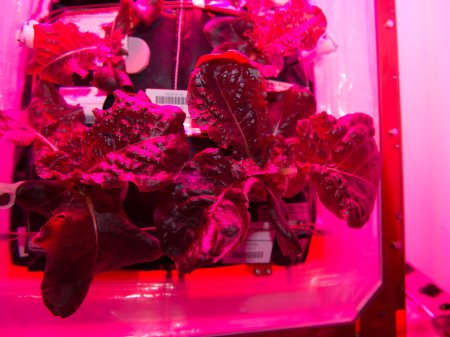
Three crew members aboard the ISS made history this week when they snacked on a salad grown, harvested, and eaten IN SPACE! 🎉🍃

CREDIT: NASA
CREDIT: NASA

Published August 10th 2015 via YouTube by NASA Johnson – ‘That’s one small bite for a man, one giant leaf for mankind. Fresh food grown in the microgravity environment of space officially is on the menu for the first time for NASA astronauts on the International Space Station. Astronauts Scott Kelly, Kjell Lindgren and Kimiya Yui of Japan sample the fruits of their labor after harvesting a crop of “Outredgeous” red romaine lettuce from the Veggie plant growth system on the International Space Station.

Crew Members on ISS Make History by Eating Salad: From Lettuce Grown and Prepared in Space!

SCIENCE VIDEO WRAP UP: Colossal Squid Sighting, Cosmic Photobomb, and Peacock Spiders Dance!

KS_LOGOs2_TVbroadcastKSTV WEEKLY SCIENCE WRAP UP


1) Colossal Squid Caught on Camera!

2) The ‘Dark Side’ of the Moon Photobombs Earth

3) New Peacock Spiders Discovered in Australia

4) The Winner of Nat Geo’s Latest Photo Contest


Video

First Known Venomous Frogs Uses Spiky Faces To Deliver Deadly Headbutt

KS Strange ScienceDon’t try to butt heads with these little guys – it just might kill you! The first known venomous frogs have been discovered Brazil. They use small spines on their head, and a vicious head thrash, to inject their potent venom. Yikes! 🐸

Corythomantis greeningi. CREDIT: Carlos Jared / Butantan Institute

Poisonous frogs are nothing new, but ‘truly’ venomous frogs are. Traditionally, venomous creatures bite, sting or stab you to do their damage, while you have to bite or touch poisonous critters to feel their effects. I suppose the venomous variety are a bit more proactive with their toxins. 🐍

“Discovering a truly venomous frog is nothing any of us expected, and finding frogs with skin secretions more venomous than those of the deadly pit vipers of the genus Bothrops was astounding,” co-author Edmund Brodie, Jr., of Utah State University said in a press release.

Brodie and his colleague Carlos Jared of Instituto Butantan in São Paulo, Brazil, study Corythomantis greeningi (Greening’s frog) and Aparasphenodon brunoi (Bruno’s casque-headed frog). Jared learned the frogs were venomous the hard way after a Greening’s frog ‘stung’ his hand, which resulted in excruciating pain that spread up his arm – lasting five hours!

According to NBC News, a single gram of the venom from the more toxic frog species, Aparasphenodon brunoi, could kill more than 300,000 mice, or about 80 humans, while a gram of the venom from Corythomantis greeningi could kill more than 24,000 mice, or about six humans.

The frogs release a white, toxic mucus from glands in their skin when they feel threatened. Then they use the spines on their skull to drive the toxins into its enemy’s flesh. No thanks…


First Known Venomous Frogs Uses Spiky Faces To Deliver Deadly Headbutt

The “Dark Side” of the Moon Photobombs Earth From One Million Miles Away

Krystian Science Space

Credits: NASA/NOAA
Credits: NASA/NOAA

It’s not often you get to see the fully illuminated “dark side” of the moon – but, thanks to a NASA camera aboard the Deep Space Climate Observatory (DSCOVR) satellite, we received a unique view of the moon as it moved in front of the sunlit side of Earth last month. SO cool!

The animation below features actual satellite images of the far side of the moon, illuminated by the sun, as it crosses between the DSCOVR spacecraft’s Earth Polychromatic Imaging Camera (EPIC) and telescope, and the Earth – one million miles away.

EPIC’s job is to constantly monitor the fully illuminated Earth as it rotates. It provides observations of vegetation, cloud height, ozone, and aerosols in the atmosphere. Once EPIC begins regular observations next month, NASA will post daily color images of Earth to a dedicated public website. 🌍

These images were taken between 3:50 p.m. and 8:45 p.m. EDT on July 16, showing the moon moving over the Pacific Ocean near North America. The North Pole is in the upper left corner of the image, reflecting the orbital tilt of Earth from the vantage point of the spacecraft.

Credits: NASA/NOAA
Credits: NASA/NOAA

DSCOVR is a partnership between NASA, NOAA and the U.S. Air Force. For more information visit: http://www.nesdis.noaa.gov/DSCOVR

The “Dark Side” of the Moon Photobombs Earth From One Million Miles Away

Humpback Whales, Camel Racing, and a Sauna in the Sky: View the Winners of National Geographic’s 2015 Traveler Photo Contest

KS_LOGOs2_PopCultureThe winners of the 27th annual National Geographic Traveler Photo Contest have just been announced! 🎉

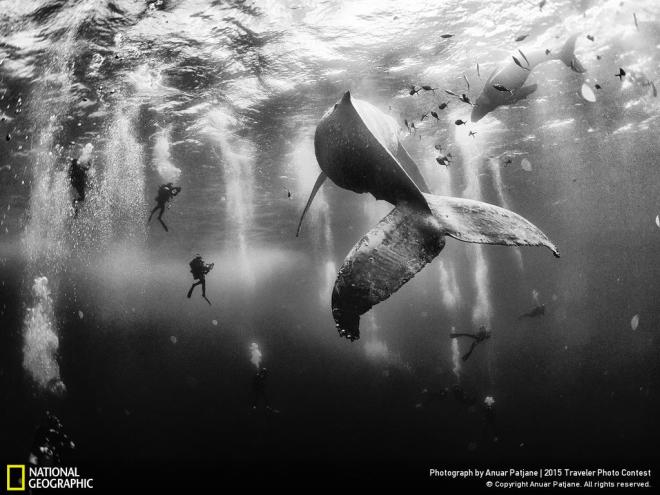
First place went to Anuar Patjane for his photo of divers swimming with a humpback whale and her newborn calf off the coast of Mexico. He won an eight-day photo expedition for two to Costa Rica and the Panama Canal. Not a bad deal!

Winner of the 2015 Traveler Photo Contest. Credit: Anuar Patjane

The 2015 Traveler Photo Contest judges reviewed nearly 18,000 photographs, and ten pictures won top prizes. Photographers entered pictures into four categories: Travel Portraits, Outdoor Scenes, Sense of Place, and Spontaneous Moments. You can view the top ten below – click here to browse all of the entries and pick your favorites!

Gallery

NASA’s Newest Robot Prepares to Build Largest Composite Rocket Parts Ever Made

KS Technology

NASA’s Marshall Space Flight Center in Huntsville, Alabama, just received a very sophisticated tape dispenser. The latest addition to Marshall’s Composites Technology Center is one of the largest composites manufacturing robots created in America. It will help NASA build the biggest, lightweight composite parts ever made for space vehicles.

The robot’s head has 16 spools of composite fiber tape that it releases in precise patterns to make both small and large objects. As the fibers are released they are heated so that they adhere to various surfaces. The head can be changed out for different projects. Credits: NASA/MSFC/Fred Deaton

According to NASA, composites are the materials of the future for aerospace because they are lighter and cheaper than traditional materials, like metals.

Marshall has been investing in composites for a long time,” said Preston Jones, deputy director of Marshall’s Engineering Directorate. “This addition to Marshall’s Composites Technology Center provides modern technology to develop low-cost and high-speed manufacturing processes for making large composite rocket structures. We will build and test these structures to determine if they are a good fit for space vehicles that will carry humans on exploration missions to Mars and other places.

Lightweight composites have the potential to increase the amount of payload that can be carried by a rocket – the lighter the rocket, the more crew, food, equipment, and science instruments the rocket can ferry into space. NASA is doing research to determine whether composites can be part of their new Space Launch System and other exploration spacecraft, such as rovers and landers.

In order to make large composite structures, the robot travels down a 40-foot-long track, placing carbon fibers onto a tooling surface in precise patterns. The head at the end of its 21-foot robot arm holds up to 16 spools of carbon fibers that are as thin as human hairs! The robot will build structures larger than 26 feet (8 meters)  in diameter, which are some of the largest composite structures ever built for space.

Click the video below to see the new robotic system in action. 🚀

NASA’s Newest Robot Prepares to Build Largest Composite Rocket Parts Ever Made

Coca-Cola Wreaks Havoc on Your Body in Just 10 Minutes: See What Happens in One Hour!

KS HealthWe all know Coca-Cola is a guilt-filled sugar bomb, but did you know the impact it has on the human body – in just ONE hour!? The Renegade Pharmacist broke it down for us, and it isn’t pretty…

Coca Cola Chart1) In The First 10 minutes: 10 teaspoons of sugar hit your system. (100% of your recommended daily intake.) You don’t immediately vomit from the overwhelming sweetness because phosphoric acid cuts the flavor allowing you to keep it down.


2) 20 minutes: Your blood sugar spikes, causing an insulin burst. Your liver responds to this by turning any sugar it can get its hands on into fat. (There’s plenty of that at this particular moment)


3) 40 minutes: Caffeine absorption is complete. Your pupils dilate, your blood pressure rises, as a response your livers dumps more sugar into your bloodstream. The adenosine receptors in your brain are now blocked preventing drowsiness.


4) 45 minutes: Your body ups your dopamine production stimulating the pleasure centers of your brain. This is physically the same way heroin works, by the way.


5) >60 minutes: The phosphoric acid binds calcium, magnesium and zinc in your lower intestine, providing a further boost in metabolism. This is compounded by high doses of sugar and artificial sweeteners also increasing the urinary excretion of calcium.


6) >60 Minutes: The caffeine’s diuretic properties come into play. (It makes you have to pee.) It is now assured that you’ll evacuate the bonded calcium, magnesium and zinc that was headed to your bones as well as sodium, electrolyte and water.


7) >60 minutes: As the rave inside of you dies down you’ll start to have a sugar crash. You may become irritable and/or sluggish. You’ve also now, literally, pissed away all the water that was in the Coke. But not before infusing it with valuable nutrients your body could have used for things like even having the ability to hydrate your system or build strong bones and teeth.

Soda

After seeing so many people suffering from obesity related diseases like heart disease, diabetes and the side effects of the medication they were taking, I was strongly motivated to research what actually causes people to become obese, it clearly was not just the fat they were eating!

I actually discovered that a trigger factor for many widespread diseases of the west such as obesity, heart disease and diabetes could be closely linked to the consumption of one particular substance found in many processed foods and drinks – fructose in the form of high fructose corn syrup.

Fructose is the form of high fructose corn syrup is found in pretty much all processed foods such as ready meals, fast foods, sweets and fizzy drinks and most people are totally unaware of its danger.

– Niraj Naik, former UK pharmacist and the mind behind The Renegade Pharmacist.

Coca-Cola Wreaks Havoc on Your Body in Just 10 Minutes: See What Happens in One Hour!

Rare Massive Colossal Squid Caught on Camera Trying to Steal Fish in Russia

KS_LOGOs2_UnderwaterRussian fishermen were left stunned when a massive colossal squid tried to steal the latest catch off the side of their boat – and it was all caught on video! 🐙

Michael Vecchione, an adjunct scientist at NOAA’s National Systematics Lab and giant squid expert, told The Huffington Post the creature seen in the video below is in fact a colossal squid, not a giant squid. This can be a tough call to make given that the cephalopod relatives are both mythical creatures of the deep, rarely seen alive.

Colossal squid (Mesonychoteuthis hamiltoni) are slightly shorter than giant squid (Architeuthis dux), but have a larger, heavier body. Giant squid live deep underwater and manage to avoid human contact – for the most part. The largest giant squid ever recorded by scientists was almost 43 feet (13 meters) long, and may have weighed nearly a ton. YIKES.

Watch the crazy colossal squid footage below – published to YouTube on July 23!

Rare Massive Colossal Squid Caught on Camera Trying to Steal Fish in Russia

A New Tasty Sensation Has Been Added to the Human Palate: Sweet, Sour, Bitter… FAT!

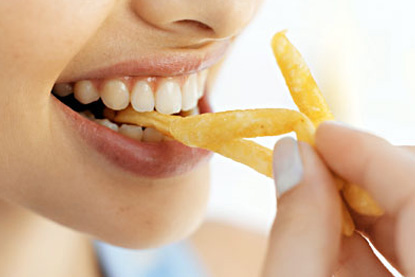
KS HealthWhen we eat we have come to recognize a few basic tastes: sweet, sour, bitter, salty, and the newly recognized ‘umami.’ But, according to a new study from Purdue University, fat should be considered a sixth taste called ‘oleogustus’ – “oleo” being the Latin root word for oily or fatty, and “gustus” referring to taste. Fries
Whatever you do, make sure you don’t confuse the taste of fat with the creamy, smooth feel of fat.

Most of the fat we eat is in the form of triglycerides, which are molecules comprised of three fatty acids… Triglycerides often impart appealing textures to foods like creaminess. However, triglycerides are not a taste stimulus. Fatty acids that are cleaved off the triglyceride in the food or during chewing in the mouth stimulate the sensation of fat,” said Richard D. Mattes, distinguished professor of nutrition science.

Mattes says fat itself has a generally unpleasant flavor, but low concentrations of fatty acids in food may add to their appeal just like unpleasant bitter chemicals can enhance the pleasantness of foods like wine, coffee, and chocolate. This mouth-watering revelation could possibly lead to better tasting food!

The taste component of fat is often described as bitter or sour because it is unpleasant, but new evidence reveals fatty acids evoke a unique sensation satisfying another element of the criteria for what constitutes a basic taste, just like sweet, sour, salty, bitter and umami. By building a lexicon around fat and understanding its identity as a taste, it could help the food industry develop better tasting products and with more research help clinicians and public health educators better understand the health implications of oral fat exposure,” said Mattes, who studies the mechanisms and function of taste.

There are no familiar words to describe the taste of fat, which is why the 102 study participants monitored by Mattes had trouble placing it. They were given multiple cups of solutions each containing a compound that tasted salty, sweet, umami, bitter, sour, or fatty. They were then asked to sort the solutions into groups, often misplacing the fatty samples with the bitter group. Eventually, when asked to sort samples including bitter, umami, and fatty stimuli, panelists grouped the fatty acids together correctly.

The findings were published online in the journal Chemical Senses. Archer Fat GIF

A New Tasty Sensation Has Been Added to the Human Palate: Sweet, Sour, Bitter… FAT!

I’m an Adult and I Can’t Wait for the New Star Wars Little Golden Books for Kids!

KS_LOGOs2_PopCulture

Screen Shot 2015-07-23 at 12.20.36 PM

The new Star Wars Little Golden Books almost make me want to have a baby – almost. 😏 Disney just announced this week that all of the legendary Star Wars movies are about to join the iconic Little Golden Books series for kids.

“The Star Wars franchise has woven itself into the hearts and minds of generations of fans, many of whom read Little Golden Books as children,” said Jeanne Mosure, Senior Vice President, Group Publisher, Disney Publishing Worldwide in a release. “We’re very excited to be incorporating Little Golden Books into our overarching strategy so parents can now introduce their own children to the wonders of the galaxy through this classic format.”

The first six books in this series will be released on July 28: The Phantom Menace, Attack of the Clones, Revenge of the Sith, A New Hope, The Empire Strikes Back and Return of the Jedi. A boxed set of these first six Star Wars Little Golden Books will be available on September 1, 2015. Check out the six covers below!

This slideshow requires JavaScript.

I’m an Adult and I Can’t Wait for the New Star Wars Little Golden Books for Kids!