Australia is home to some pretty gnarly creatures, but I’ve never seen one quite this unsettling. Don’t get me wrong, this alien-like sea slug is oddly beautiful – it just gives me chills. Glaucusatlanticus, more commonly known as the “blue dragon,” made headlines this week after washing ashore in Australia.
IMAGE: SYLKE ROHRLACH/FLICKR
Blue dragon sightings are rare, but they have been known to wash ashore while hunting for prey. The blue dragon is so badass it feeds on the Portuguese man o’ war. MAN O’ WAR! Man o’ war are incredibly poisonous. And, despite popular belief, they are not jellyfish! They are siphonophores; animals made up of a colony of organisms working together.
Their tentacles are one of four organisms, covered in venom-filled nematocysts that they use to paralyze and kill fish. For humans? The man-of-war sting is unbelievably painful, but not often deadly. Blue dragons actually snack on the man o’ war’s toxic stingers. They store the poisons within their own bodies and gain the ability to sting like crazy. Ouch!
The blue dragon is tiny, spending most of its time upside down in the water, riding the surface tension of the water’s surface. But, don’t let its small size fool you – it clearly packs a potent poisonous punch.
The video below was uploaded to Facebook on November 12 by Lucinda Fry, and it already has over 200,000 views! Warning: it’s super creepy. You won’t be able to look away.
Chances are you know exactly what cheese you like on your grilled cheese sandwich. Maybe you enjoy a little stringy mozzarella, creamy american, or tangy sharp cheddar. Well, according to science, you’re wrong! The American Chemical Society has broken down the science behind the iconic melty sandwich – and it turns out it’s all about pH!
I was surprised to find out that acid levels dictate the ultimate ‘gooeyness’ of cheese. Cheeses with an acidity in the range of pH 5.3 to 5.5 — such as gouda, gruyére or manchego — are best for being heated up in a sandwich.
Too much acidity (or a very low pH), aka ‘sharper’ cheeses, can break down while melting leaving you with a clumpy texture. So, if you are trying to pick the right cheddar cheese, go with the more mild option.
The latest video from the YouTube series Reactions, hosted by the ACS, explains the chemistry of the perfect grilled cheese sandwich in-depth. You’ve got to check it out below! 😜
As for me? I’ll stick with american cheese and a whole lot of butter. It made me smile when I was 5 years old and it still makes me smile today.
Researchers have captured three different giant squid babies off the coasts of western and south-western Japan. This is the first time this has EVER happened in the whole world! 🐙 I’m absolutely terrified of giant squid (thanks to this exhibit at the AMNH), but I’m also obsessed with these fascinating creatures of the deep.
A baby giant squid caught off the coast of Kagoshima prefecture in southwestern Japan. MORIHIKO YAMADA/MUSEUM OF NATURE AND HUMAN ACTIVITIES
According to National Geographic, giant squid are thought to reach sizes up to 60 feet (18 meters), but because they live at such great ocean depths adults have never been studied in the wild – let alone babies.
The Museum of Nature and Human Activities in Hyogo prefecture said researchers caught three individuals of small, young giant squid (Architeuthis due) in or near Japanese coastal waters from April–June 2013. The discovery was published last week in the journal Marine Biodiversity Records.
The first baby giant squid was recorded on the coast off Kyushu Island, southern Japan. The remaining two were caught dead in fishing nets off the coast of Shimane, south-western Japan. Giant squid are the world’s largest invertebrates but each baby weighed in at under a pound and ranged from 5-13 inches in length.
I guess they aren’t so scary when they are just one foot long! Needless to say the scientific community is excited by this discovery. Researcher Toshifumi Wada told The Wall Street Journal, “This is the first time in the world that such young giant squid were found, and it has helped us understand what they are like this early in their life stage.”
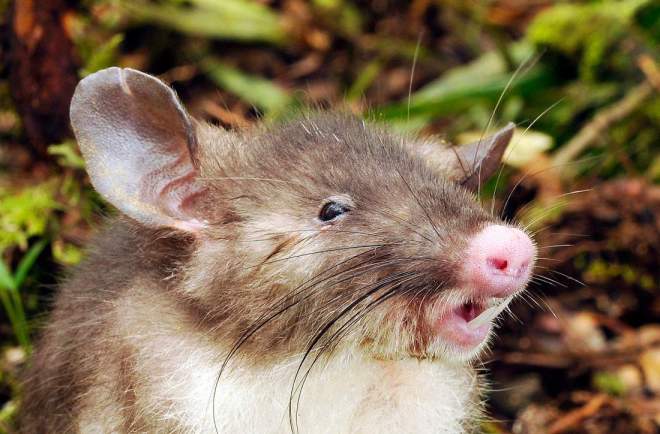
Scientists in Indonesia just discovered a new mammal and they named it the hog-nosed shrew rat. Seems a little harsh, right? But I guess that’s to be expected when you find a rat with a little piggy face. 🐀🐷
This new species of rat is called Hyorhinomys stuempkei, or the hog-nosed rat. Credit: Museum Victoria
According to the BBC, the unusual creature was discovered on Sulawesi island by researchers from Australia, Indonesia and the United States. While the hog-nosed rat (Hyorhinomys stuempkei) shares many traits with other rats in the area, there are a few features that are unique to the species. It has huge ears for an animal its size, a long hog-like nose with forward-facing nostrils, and flat nails.
It also has ‘very long urogenital hairs.’ That means it has long pubic hair – a lot of it. I don’t know what you want to do with that information, but its written right there in the report.
Credit: Museum Victoria YouTube
Credit: Museum Victoria YouTube
Credit: Museum Victoria YouTube
Morphologically, the hog-nosed rat is most similar to a group of endemic Sulawesi rats known commonly as “shrew rats.” These are long faced, carnivorous murines, and include the genera Echiothrix, Melasmothrix, Paucidentomys, Sommeromys, and Tateomys.
Discovery of this new genus and species brings known shrew rat diversity on Sulawesi to 6 genera and 8 species. Researchers believe the physical diversity among these animals is ‘remarkable’ considering the small number of species currently known. The findings were published in this month’s Journal of Mammalogy.
A 59 year-old obese Maryland woman died over 20 years ago, but details of her anatomy will live on in the digital world. Scientists with The Visible Human Project (creepiest name ever) sliced her cadaver over 5,000 times in order to create a super detailed digital image of the human body.
Image: Visible Human Project
High-resolution images showing cross-sections of the body – at just a third of a millimeter thick – were stitched together to create a digital version of the woman, referred to as the ‘human phantom.’
The Visible Human Project was created by the U.S. National Library of Medicine in 1986. Their goal is to provide digital subjects for medical education, but they also hope to provide a new way for researchers to conduct experiments deemed too dangerous to perform on living humans.
“They have ten times as much information as you’d get from an MRI scan,” Dr Fernando Bello, from Imperial College London, told New Scientist. “It means the team will have much more information about organs and their structuring.”
The unnamed woman was not the first to undergo this procedure. The project also digitally pieced together a man in the 1990’s, but the woman’s recreation is much more detailed due to the fact she was sliced thinner (yikes). The male cadaver was sectioned at 1 millimeter intervals; the woman at intervals of just a third of a millimeter.
Click here to learn more about the Visible Human Project. And watch the crazy video below showing 1,800 cross-section images of the male cadaver!
‘The Insight Astronomy Photographer of the Year competition is an annual celebration of the most beautiful and spectacular visions of the cosmos by astrophotographers worldwide. In 2015 the competition launched for its seventh year with new categories and more prizes up for grabs. The winning images are showcased in an exhibition at the Royal Observatory Greenwich until 26 June 2016.’
Overall Winner – Eclipse Totality over Sassendalen by Luc Jamet (France) – 20 March 2015 – Spitsbergen, Svalbard, Norway
‘This year the annual Insight Astronomy Photographer of the Year competition received a record 2700 entries by astrophotographers from 59 countries around the world. These astonishing pictures reveal fresh perspectives on astrophotography favourites alongside some of the great astronomical events of the last year.
The prize-winning images displayed here combine art and science, passion and dedication. They remind us that the more we learn about our universe, the more beautiful it becomes.’ – Royal Museums Greenwich
Skyscapes Runner Up – Sunderland Noctilucent Cloud Display by Matt Robinson (UK) – 7 July 2014 – Seaburn Beach, Sunderland, UK
Aurorae Winner – Silk Skies by Jamen Percy (Australia) – 19 February 2014 – Abisko National Park, Lapland, Sweden
Aurorae Runner Up – April Aurora by Kolbein Svensson (Norway) – 20 April 2014 – Hitra, Sør-Trøndelag, Norway
Galaxies Winner – M33 Core by Michael van Doorn (Netherlands) – 28 October 2014 – Almere, Flevoland, Netherlands
Galaxies Runner Up – The Antennae Galaxies – Extreme Deep Field by Rolf Olsen (Denmark) 75 Hours – 20 July 2014 Auckland, North Island, New Zealand
Our Moon Winner – Full Face of our Moon by András Papp (Hungary) – 8 March 2014 – Veszprémvarsány, Győr-Moson-Sopron County, Hungary
Our Moon Runner Up – ISS Terminator Moon by Daniel Fernández Caxete (Spain) – 8 April 2014 – Los Ranchos, Colmenarejo, Madrid, Spain
Our Sun Runner Up – Totality Ends by David Wrangborg (Sweden) – 20 March 2015 – Slakbreen, Svalbard, Norway
Our Sun Winner – Huge Prominence Lift-off by Paolo Porcellana (Italy) – 27 March 2015 – Costigliole d’Asti, Italy
Planets, Comets & Asteroids Winner – The Arrow Missed the Heart by Lefteris Velissaratos (Greece) – 21 August 2014 – Strethi Mountain, Corinthia, Greece
Planets, Comets & Asteroids Runner Up – Saturn by András Papp (Hungary) – 13 May 2014 – Gamsberg Pass, Windhoek, Namibia
People & Space Runner Up – Eternity and Astrophotographer by Yuri Zvezdny (Russia) – 14 April 2015 – San Pedro de Atacama, El Loa Province, Chile
People & Space Winner – Sunset Peak Star Trail by Chap Him Wong (Hong Kong) – 1 November 2014 – Sunset Peak, Lantau Island, Hong Kong
Stars & Nebulae Runner Up – Sirius 9798 by David Pye (UK) – 16 January 2015 – Finchley, London, UK
Stars & Nebulae Winner – The Magnificent Omega Centauri by Ignacio Diaz Bobillo (Argentina) – 31 May 2014 – San Antonio de Areco, Buenos Aires, Argentina
Young Competition Winner – A Celestial Visitor by George Martin (UK) aged 15 – 18 December 2014 – Market Harborough, Leicestershire, UK
Scientists made a very creepy discovery in a cave in Brazil – a 9,000 year-old decapitated skull covered by two severed hands. Researchers have concluded that the skull and hands found below represent the oldest case of decapitation in the New World. 💀
CREDIT: LEEH USP AND GIL TOKYO
The remains, known as Burial 26, were found in the rock shelter of Lapa do Santo, an archaeological site that has yielded 26 human burials. The grave, which was excavated in 2007, consists of a circular pit covered in limestone slabs. Under one of these slabs is where the skull and amputated hands were found.
André Strauss from the Max Planck Institute for Evolutionary Anthropology in Germany and his colleagues wrote that using cranial morphology and tooth wear they have decided the individual was most likely a young adult male. According to the study, decapitation was likely common in the New World, but this case raises questions about how the morbid practice began in the Americas.
“Few Amerindian habits impressed the European colonizers more than the taking and displaying of human body parts, especially when decapitation was involved,” said Strauss.
The skull was buried about 22 inches below the surface suggesting it was a deliberate ritual entombment, not the result of an enemy trophy. The placement of the hands in opposite directions on the skull leads researchers to believe it was a ritualized decapitation. See more photos here!
“The careful arrangement of the hands over the face is compatible with an important public display component in the ritual that could have worked to enhance social cohesion within the community,” Strauss said.
Scientists hope to analyze the DNA of the remains in the near future to learn more about who they belonged to. The findings were published online Sept. 23 in the journal PLOS ONE.
Human beings are not sterile organisms – we are made up of millions of living microbes. In fact, we shed up to a million particles an hour! That means over the course of a day you will ditch roughly 24 million biological particles (bacteria, viruses, spores and more) into the air around you, forming what scientists are calling a ‘microbe cloud.’ It looks like everyone has a little more in common with Pig-Pen from Peanuts than we thought. 😷
Adam Altrichter, a microbial ecologist at the University of Oregon, and his colleagues asked 11 individuals to spend varying amounts of time in a sanitized sample chamber. Then they sampled the surfaces and the air for microbes.
Researchers discovered that most people could be clearly detected by their airborne bacterial emissions alone, as well as settled particles found on surfaces. Bacterial clouds from the sample groups were statistically distinct! The results show for the first time that individuals release their own personalized microbial cloud. We each give off a slightly different cocktail of bacteria.
“Our results confirm that an occupied space is microbially distinct from an unoccupied one,” the authors wrote, “and reveal for the first time that individuals occupying a space can emit their own distinct personal microbial cloud.”
Our unique ‘microbe clouds’ could have an impact on epidemiology, environmental engineering, or criminal forensics. The findings were published Tuesday in the journal PeerJ.
Beads of sweat formed on my face the second I stepped out of the airport in Puerto Vallarta. It was 95 degrees and unbearably humid in Mexico, but my boyfriend and I were too excited to care. Our Airbnb host kindly set us up with a friend of hers – an English gentleman named Colin – to drive us through the jungle into Sayulita. The sleepy surfer town was smaller than I expected, nestled between lush green and bright blue water. Its charm was instantly undeniable. 🌴🌊
Our Airbnb was gorgeous. Sitting proudly atop Gringo Hill (yes, that’s the proper name), Casa Caracol consists of three casitas – each with an ocean view and access to a beautiful pool. We began our stay in the bottom unit, but due to some unexpected flooding during a surprise nighttime thunderstorm we ended up moving to the top unit to finish out our trip. We were the only people staying at Casa Caracol at the time so we felt like we had the whole property to ourselves!
So, speaking of being the only visitors at our Airbnb, and the intense heat, and the rain storms… my boyfriend and I decided to visit Sayulita during the off-season. Not by choice really, our vacation just fell during the end of August. Turns out, the city shuts down a bit from August-October due to extreme weather and lack of tourist cash flow. This ultimately worked in our favor. While a lot of restaurants and shops were closed, the ones that were open weren’t packed and we ended up receiving excellent service. That is most likely due to the fact that the locals are fairly kind – and also because we were clearly visiting with pesos to burn and a thirst for tequila.
Our apartment was a quick 5 minute walk to the city center and just a 10 minute walk to the beach. Once I saw the main beach in Sayulita I understood why it draws such huge crowds during the year. The water is warm, the surf is good, and the sand is full of shimmering gold flecks. There are roughly 4,000 people living in Sayulita, but during the peak-season (around December) the number of occupants in the city swells to roughly 40,000!
To wrap it up, we had the most relaxing vacation. We spent most days lounging on the beach eating Mexican fare and downing Pacificos. We went hiking, swam at the pool, and cooked meals at Casa Caracol – enjoying our ocean views at the top of Gringo Hill. We came across funny little land crabs, geckos, and a bunch of colorful butterflies. Because our cell phones were in airplane mode for the week we ended up reading a lot. My boyfriend read The Drifters for the third time. I went for the more macabre, reading a collection of short stories by Stephen King and Devil in the White City. We made friends, played cards, worked on our Spanish, and took time to appreciate the city’s laid back lifestyle.
Click here to see my favorite spots to eat and drink in Sayulita! 🍻🍴
 Australia is home to some pretty gnarly creatures, but I’ve never seen one quite this unsettling. Don’t get me wrong, this alien-like sea slug is oddly beautiful – it just gives me chills. Glaucus atlanticus, more commonly known as the “blue dragon,” made headlines this week after washing ashore in Australia.
 Chances are you know exactly what cheese you like on your grilled cheese sandwich. Maybe you enjoy a little stringy mozzarella, creamy american, or tangy sharp cheddar. Well, according to science, you’re wrong! The American Chemical Society has broken down the science behind the iconic melty sandwich – and it turns out it’s all about pH!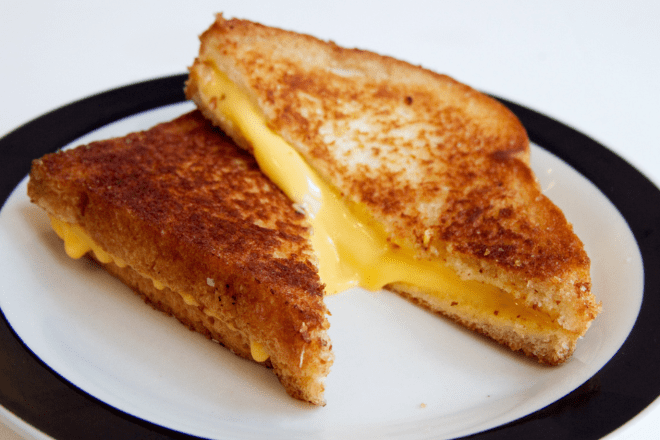
 Researchers have captured three different giant squid babies off the coasts of western and south-western Japan. This is the first time this has EVER happened in the whole world! 🐙 I’m absolutely terrified of giant squid (thanks to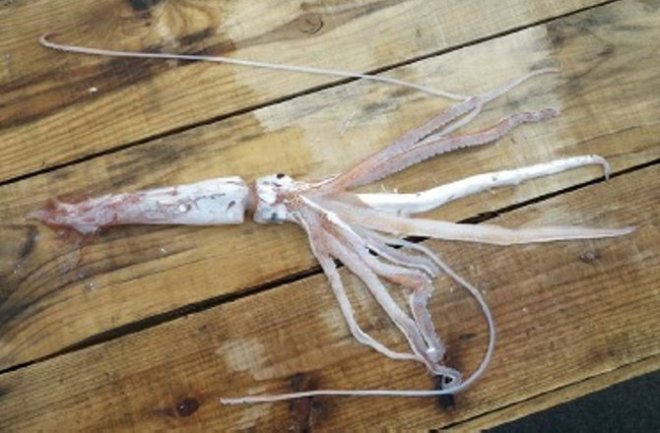




 A 59 year-old obese Maryland woman died over 20 years ago, but details of her anatomy will live on in the digital world. Scientists with The Visible Human Project (creepiest name ever) sliced her cadaver over 5,000 times in order to create a super detailed digital image of the human body.
 ‘The Insight Astronomy Photographer of the Year competition is an annual celebration of the most beautiful and spectacular visions of the cosmos by astrophotographers worldwide. In 2015 the competition launched for its seventh year with new categories and more prizes up for grabs. The winning images are showcased in an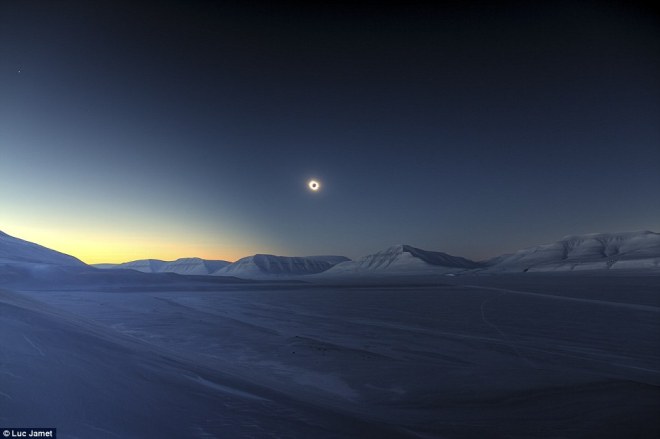


 Scientists made a very creepy discovery in a cave in Brazil – a 9,000 year-old decapitated skull covered by two severed hands. Researchers have concluded that the skull and hands found below represent the oldest case of decapitation in the New World. 💀

 Beads of sweat formed on my face the second I stepped out of the airport in Puerto Vallarta. It was 95 degrees and unbearably humid in Mexico, but my boyfriend and I were too excited to care. Our Airbnb host kindly set us up with a friend of hers – an English gentleman named Colin – to drive us through the jungle into Sayulita. The sleepy surfer town was smaller than I expected, nestled between lush green and bright blue water. Its charm was instantly undeniable. 🌴🌊


 Krystian Science