 I live in San Francisco and the California Academy of Sciences is one of my favorite places to visit! Who doesn’t love penguins, rainforests, albino alligators, and a rad planetarium all under one roof??
In 2015, researchers at the Academy added 102 new plant and animal species to our family tree. The new species include two frogs, 23 ants, three beetles, eight wasps, 11 spiders, 26 fishes, nine sea slugs, two corals, nine plants, one water bear, and eight new viruses.
Given that we have found less than 10% of the species on our planet, the Academy has inspired me to share ten of my favorite wild new species discovered in 2015. Meet the hog-nosed shrew rat, sparklemuffin spider, and water bear. Happy New Year! 🎉

Behold sparklemuffin (Maratus jactatus), a peacock spider found in Australia.

Enyalioides sophiarothschildae, one of the three new species of dwarf dragons discovered in the Andes of Peru and Ecuador.

“Water bear” is a cuddly name for a microscopic water-dwelling organism with eight legs topped by tiny claws.

Shape-shifting frog. This species, found in Ecuador, can change the texture of its skin in a matter of minutes.

Like other horseshoe bats, this newfound animal has a large structure on its face that is shaped somewhat like a (surprise!) horseshoe.

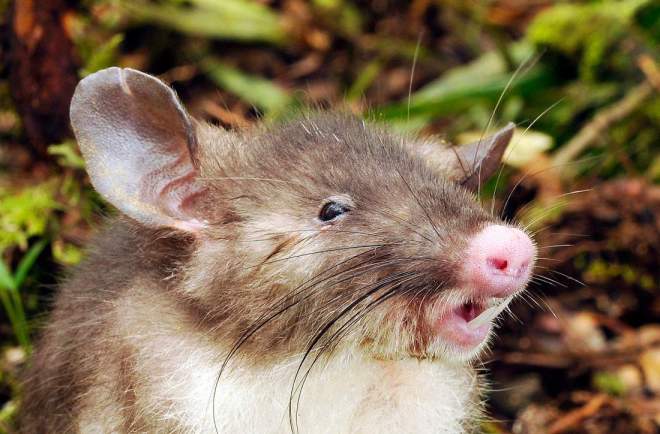
The hog-nosed rat (Hyorhinomys stuempkei) was found on a mountain in Sulawesi, an island in Indonesia.

A face only a mother could love. A close-up view of the electric ray Tetronarce cowleyi, which feeds on bony fish and small sharks.

This marine pill bug (Exosphaeroma pentcheffi), found in a seaside park in Los Angeles, is just one of many species discovered in 2015.

Researchers from the Academy described six new species of strange subterranean ants from the genus Prionopelta in Madagascar and Seychelles – known as ‘Dracula’ ants.

Another newly discovered species of nudibranch, or sea slug: the pink-and-orange Doto splendidisim.



 Krystian Science